
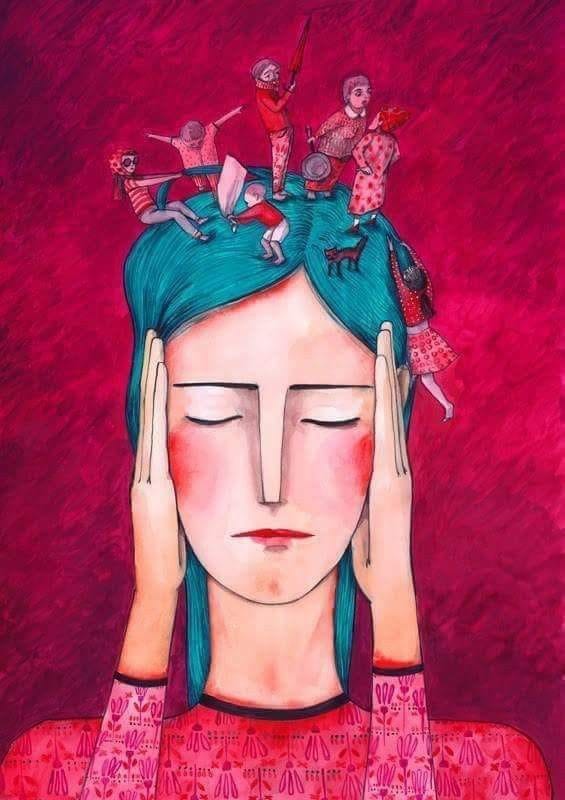
The World of Concealment During times of severe collective crisis, reality becomes violently contradictory. There is extreme danger and uncertainty, yet the mechanics of daily life somehow continue. People still go to work, traffic still moves, and the mundane operates right next to the catastrophic.
Inner wisdom refers to our current dimension as the “World of Concealment.” Reality often appears illogical and chaotic because we are only permitted to see fragmented pieces of the puzzle. Behind the apparent randomness, a deeper, highly calculated system of order is operating, but on the surface, it feels like absolute madness.
The Death of Control In periods of global upheaval, the ultimate human illusion is shattered: the illusion of control. We spend our lives building secure routines, bank accounts, and schedules, pretending we are the architects of our fate. Then, a single global event—or a single siren—changes the entire landscape in a second. Crisis forces us to confront the boundary of our own power.
Therefore, asking “Who is acting normal right now?” is the wrong question. Some people cope with the loss of control by hyper-functioning—moving, working, and traveling—because momentum keeps them from feeling the dread. Others cope by contracting, staying close to safety, and minimizing exposure. Both are simply mechanical responses of the psyche.
The Navigation Trinity You are not meant to navigate a crisis purely on blind fear, nor on reckless denial. You must operate using a trinity of tools: Intellect, Responsibility, and Inner Listening.
Your nervous system is a highly calibrated instrument designed to detect threats. The desire to protect yourself, to stay close to a safe space, and to avoid unnecessary risks is not a weakness; it is the fundamental intelligence of survival. If your internal architecture is telling you to stay home and remain near a secure environment, honor it. You have zero obligation to risk your peace of mind or your physical safety just to meet the social expectations of people who cope differently.
The Internal Anchor However, the balance is crucial. Do not let caution mutate into paralyzing dread. The goal is to ask yourself: “What is the most responsible, grounded action I can take right now?” In a world that has lost its mind, you must build an internal anchor. You do not yield to the external pressure of those acting recklessly, but you also do not lock yourself in a prison of panic. Sometimes, the person who quietly and intelligently restricts their movements to protect their peace is the most “normal” person in an abnormal reality.
Oriya’s Note:
Stop gaslighting yourself because you don’t feel like going out for coffee while the world feels like it’s ending.
We have this toxic societal pressure to “keep calm and carry on,” which often just translates to: “Please suppress your highly accurate survival instincts so you don’t make the rest of us uncomfortable.” If you feel the need to stay close to home, to cancel plans, and to sit near your “safe zone,” do it. You don’t owe anyone a performance of bravery. The people rushing around acting like everything is fine aren’t necessarily braver than you; they might just be entirely disconnected from their own internal warning systems.
At the same time, don’t let the fear become your dictator. Be smart. Calculate your risks. Protect your body and your energy. But remember that true safety doesn’t come from hiding perfectly; it comes from the internal knowing that even in the chaos, you are held by a system much larger than the storm.