
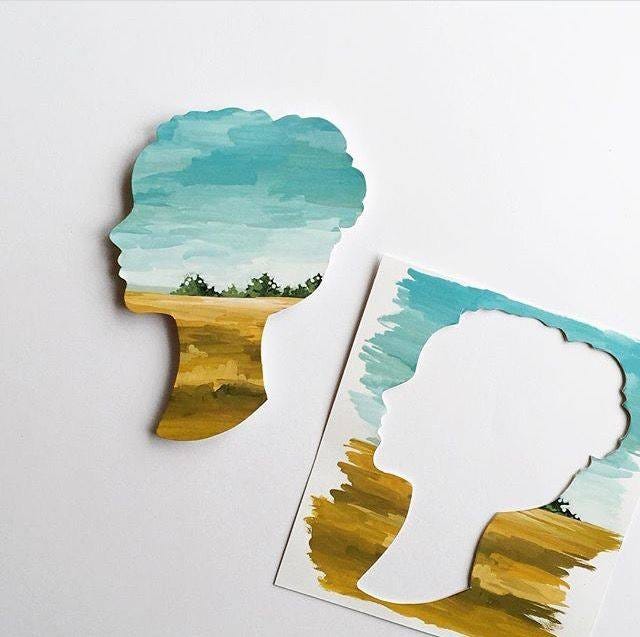
The new person is not a different person,
but the person themself—
rectified, purified, and illuminated.
It is the same “I,”
but without the partitions,
without the separateness,
without the identification with the body and the ego.
They live in this world,
but with the consciousness of the World to Come.
According to the Ramchal:
“The complete person is the form of all the worlds, and all of reality depends on their rectification.”
The new person is one who has transformed from a creature dependent on their impulses into a being of bestowal and love. The Ramchal sees the completion of the rectification as the return of the divine form to the first Adam—the person in whom everything is unified: knowledge, heart, and action. There is no conflict between matter and spirit, between heaven and earth. The new person brings the thought of creation—to bestow good upon His creations—into actuality.
According to the Tanya:
“Man was created to be a dwelling place for the Shekhinah (Divine Presence) in the lower realms.”
The new person is not an angel, but an ordinary person whose every thought, word, and deed is sanctified by the awareness of God’s unity. They no longer fight with their inclination, because they have redeemed it. The forces that once pulled them downward now become an engine for love and creation. This is the reality of “a soul in a body,” not “a body with a soul.”
According to the Holy Zohar:
“So that all the inhabitants of the world will know that He is, and all is one.”
The new person is one who recognizes that the Creator and the created are one. They live from a place of “there is nothing but Him”—not as a saying, but as a constant experience. They are not startled by sorrow, nor do they cling to joy. Everything is one light, revealing itself in different forms. The Zohar describes this as a state of “a heart that understands supernal knowledge,” where the person sees through the eyes of the Divine operating through them.
According to Baal HaSulam (Ashlag):
“The new person will be a social person, whose entire life-force is in the connection between souls.”
The new person is a communal person. They do not see themselves as an individual but as part of a complete body—the body of humanity. They function as a limb in a single system of mutual love. The ego is no longer “evil,” but raw material for rectification: the greater it is, the greater the capacity to bestow good through it. The new person is not a hermit but lives within society, and their very presence bestows light on their surroundings.
In Mashiach Consciousness – A Synthesis of All These
The new person is a “living child of God,”
in whom heaven and earth are united,
masculine and feminine,
body and soul,
action and consciousness.
They do not seek to arrive at a place—they are the place.
There is no internal struggle within them,
but a movement of natural, divine flow.
They love without reason,
speak truth without coercion,
act without ulterior motive,
and live from the soul, not from fear.
In the words of Baal HaSulam:
“The complete person does not merely rectify himself, but reveals the Creator in all of reality.”
In Summary:
Ramchal: A person who has restored the divine form to themselves, in whom all worlds are rectified.
The Tanya: A person who has transformed their animal soul into a force for holiness.
The Zohar: A person who has attained absolute unity—there is nothing but Him.
Ashlag: A person who lives for the collective, out of complete equivalence of form.
Torat Mashiach: A person in whom there is no separation—they are the revelation of the divine life-force in a body.
Reflect:
In what moments have you felt a glimpse of this “New Person”—a state without inner conflict, living from a place of love and flow?
Which description resonates most with you right now: the unified being (Ramchal), the one who has redeemed their desires (Tanya), the one who lives in unity (Zohar), or the one who lives for the whole (Baal HaSulam)?
What is one “partition” or wall of separation in your life that you can begin to dissolve today, to allow more of this New Person to emerge?
The conversation continues below.