
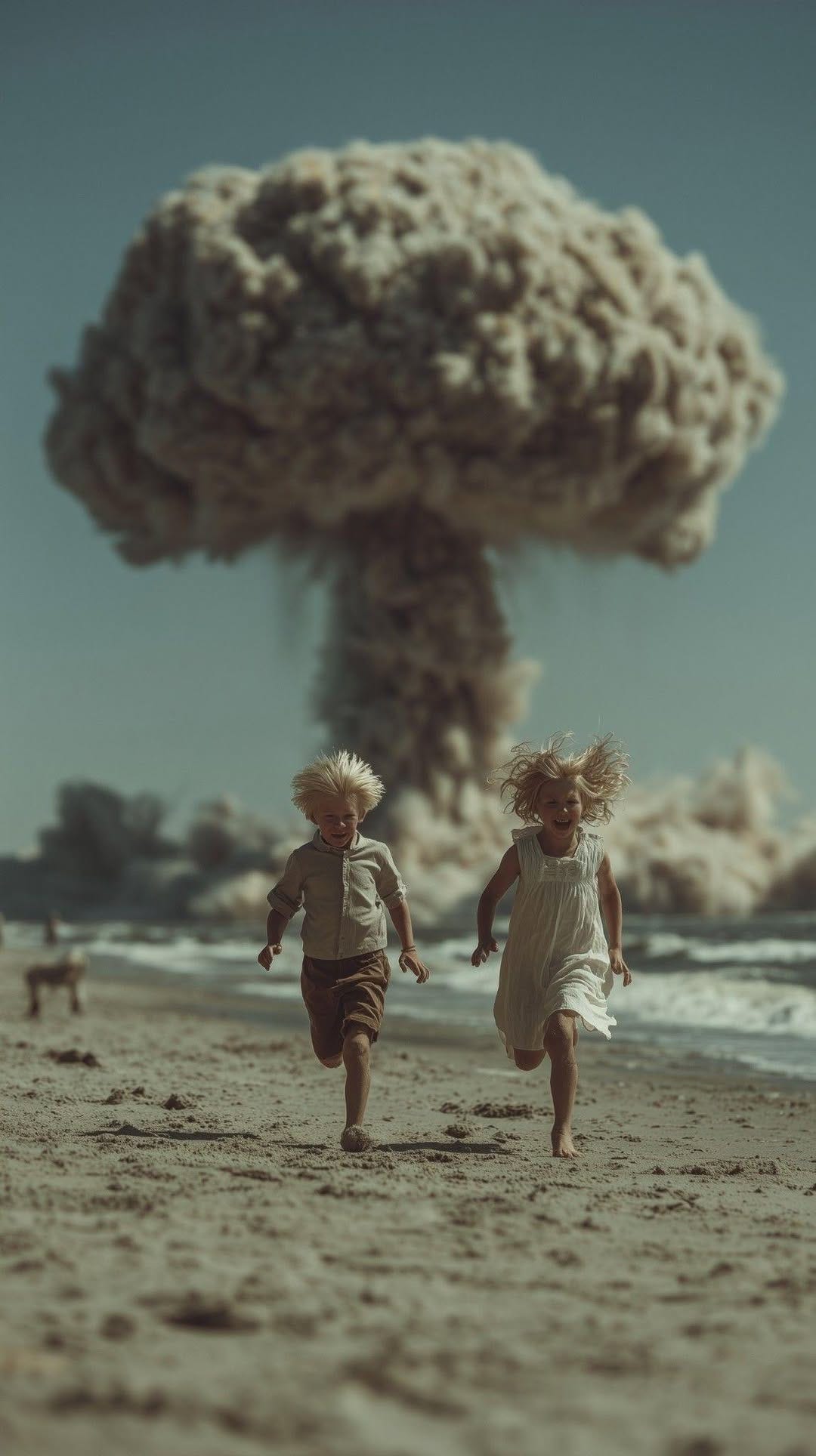
The Illusion of the Parental State One of the most dangerous psychological traps is the tendency to export personal responsibility to external systems—the State, the military, the government, or “circumstances.” When you do this, you enter a state of spiritual and cognitive dependency. You stop being a co-creator of your reality and become a mere reactor to it.
The human being was designed to be an active partner in reality, not a passive bystander. When you abdicate your judgment and expect an external system to protect, decide, and manage every danger for you, you shrink your “vessel.” You enter a state of Katnut (Immaturity), where you wait for a “savior” to solve your problems. But as reality becomes more complex and dangerous, this passive state leaves you powerless because it bypasses the only force that can actually change the field: your conscious choice.
The Cost of “Staying” There is a profound, unexamined tension between the individual and the collective system. In conflict-ridden areas, the very fact that people continue to work, build homes, and raise children under constant threat is what allows the systemic status quo to persist.
From a tactical and spiritual perspective, the persistence of the population is the fuel of the system. If entire populations were to consciously decide that the risk was no longer acceptable and moved, the State would be forced into an immediate, radical policy shift. A State is built on territory and presence; if the presence vanishes, the political and security equation must change.
However, humans are not just strategic actors. We are bound by identity, memory, and land. For many, staying in a dangerous place isn’t a lack of awareness—it is a choice of courage, loyalty, or a lack of other options. Yet, we must acknowledge the mechanical truth: when we accept the risk, we participate in maintaining the reality as it currently exists.
The Awakening from Below True change never starts at the top. Systems, governments, and leaders are merely reflections of the collective consciousness of the people they manage. If a public acts out of fear, habit, or dependency, the leadership will stabilize around those patterns.
Inner wisdom speaks of an “Awakening from Below” (Itaruta De-Leta). When individuals stop asking what “they” (the leaders) should do and start asking what “I” (the individual) am responsible for, the energetic grid of society shifts.
The Sovereignty of Action A government can manage a territory, but it cannot replace your personal responsibility for your life, your safety, and your soul. When a critical mass of people stops waiting for external solutions and starts making sovereign, conscious choices—setting boundaries on what they are willing to endure and how they are willing to live—the systems above them have no choice but to respond and reorganize.
The path to redemption (Geula) is the path of moving from being a “victim of circumstances” to becoming a “sovereign of choice.”
Oriya’s Note:
Stop waiting for the “adults in the room” to fix your life.
We’ve been programmed to think that the government is some kind of all-knowing parent that is supposed to keep us perfectly safe. But here’s the cold, hard truth: the system is just a mirror of us. If we are passive, the system is stagnant. If we stay in the line of fire because “that’s just how it is,” the system has no incentive to change the fire.
The most radical thing you can do is take back your sovereignty. Stop complaining about the leadership and start auditing your own life. Are you staying in a situation because of loyalty, or because you’re too afraid to move? Are you relying on a system that has already shown it can’t protect you?
Real power isn’t about who you vote for; it’s about the decisions you make for your own family, your own safety, and your own peace of mind. The moment you stop being a dependent “subject” and start being a sovereign soul, the entire game changes.